

Leila Pozzi
2026 National Youth Climate Activism Essay Entry
Leila is a 19 year old from Quebec.

During the COVID-19 pandemic, daily life slowed unexpectedly, and with that pause, I began noticing something besides medical reports in the news: clearer skies, reduced emissions, and signs of environmental recovery. For the first time, climate change stopped feeling abstract. I saw how quickly ecosystems could respond when human pressure decreased, and it forced me to confront a difficult reality: our impact is not only significant, but immediate.
That moment marked the beginning of my involvement in environmental activism. I became involved in community-based initiatives focused on education, collaboration, and creating spaces where young people could tangibly engage with environmental issues. I proceeded to join the youth council at Lab22, an organization dedicated to the social and ecological transition of schools, where I worked with other young people to think critically about sustainability and contribute to youth-led projects.
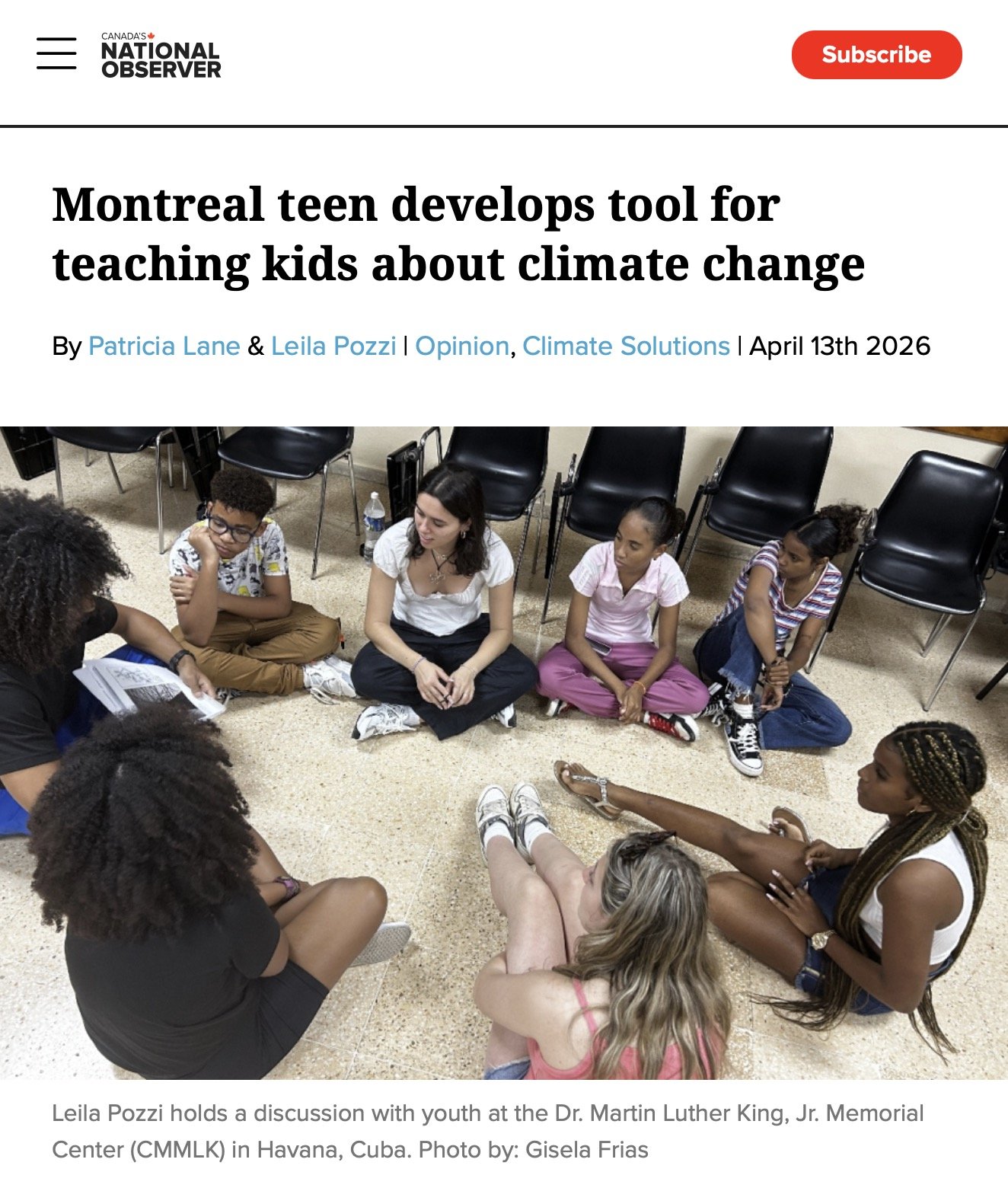
Later on, a defining shift in my perspective came when I spent a month in Cuba on a solidarity delegation. Before arriving, we were encouraged to view Cuba as a leader in low-carbon living. In many ways, it is: its reliance on local ecosystems and reduced dependence on fossil fuels offer important lessons. However, the narrative of Cuba being a pioneer of sustainability driven by moral commitment is far from the reality. The United States embargo, in place since the 1960s, depriving the Cuban people of fuel and resources, has forced Cuba to adopt a more self-sufficient way of life.
click to read (it’s free)
This challenged how I understand climate solutions. It made me question narratives from the Global North that frame sustainability as innovation, without acknowledging the structural inequalities that shape how people live. In many parts of the world, lower-carbon living is not aspirational; it is imposed. This experience also made me more aware of what I see as the gentrification of the term sustainability, where sustainable lifestyles are often marketed without recognizing the realities of those who have long lived with fewer resources.
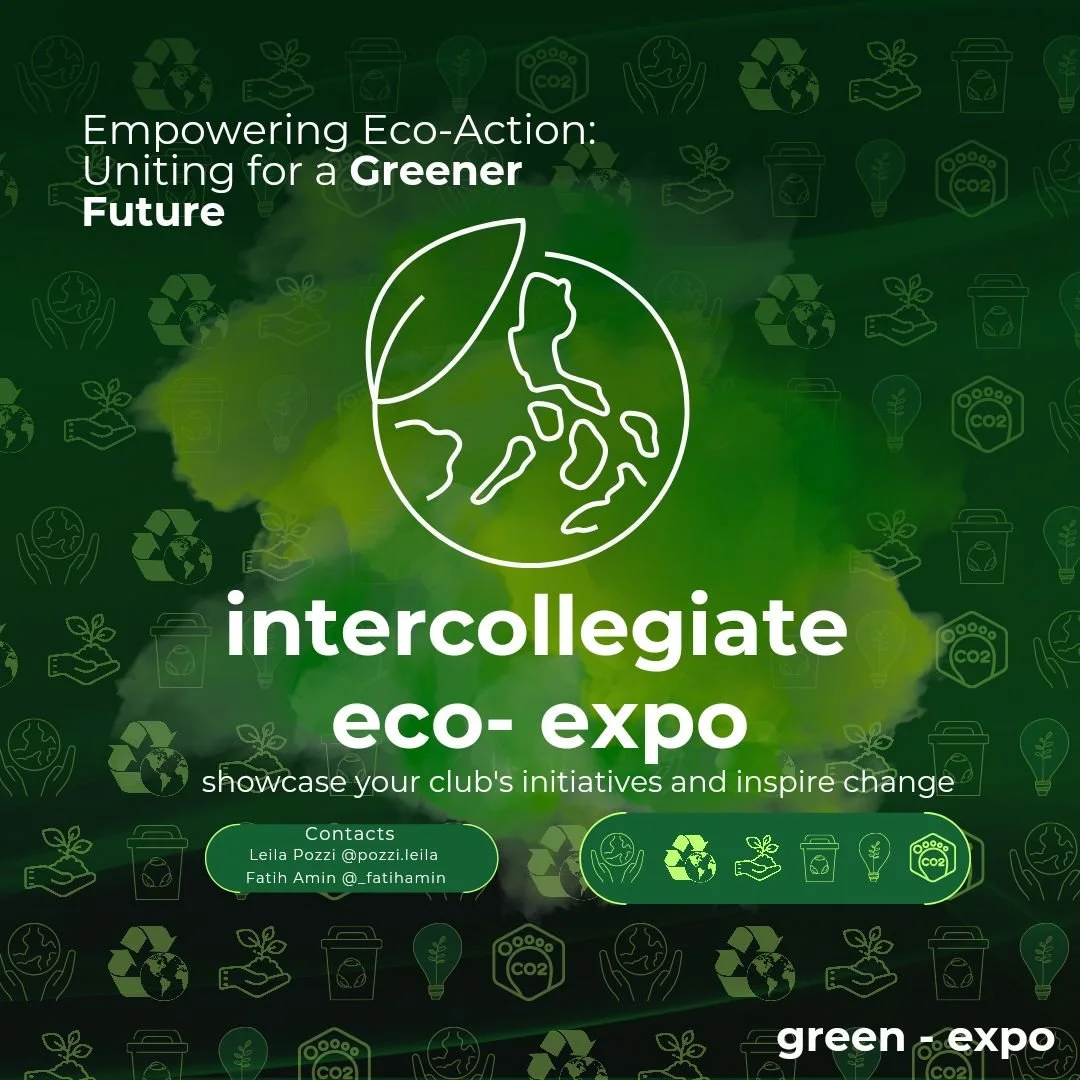
Since then, I have focused my involvement on merging these perspectives. I have helped organize youth-led initiatives that bring students together to share ongoing sustainability projects, (like the Intercollegiate Eco-Exposition where Fatih Amin and I were acknowledged for outstanding Contributions in 2024) and I have contributed to storytelling work, including this short documentary ⬆exploring the impacts of industrial development on communities and their right to a healthy environment as communications chair of Sustainable Youth Canada (Montreal Branch). Additionally, I have used my research on climate literacy to create a framework applicable to youth coming from all types of backgrounds.
image courtesy of Sustainable Youth Canada - Écosystème Jeunesse Canada
Leila & Fatih Amin receive their awards in 2024
click to follow on IG
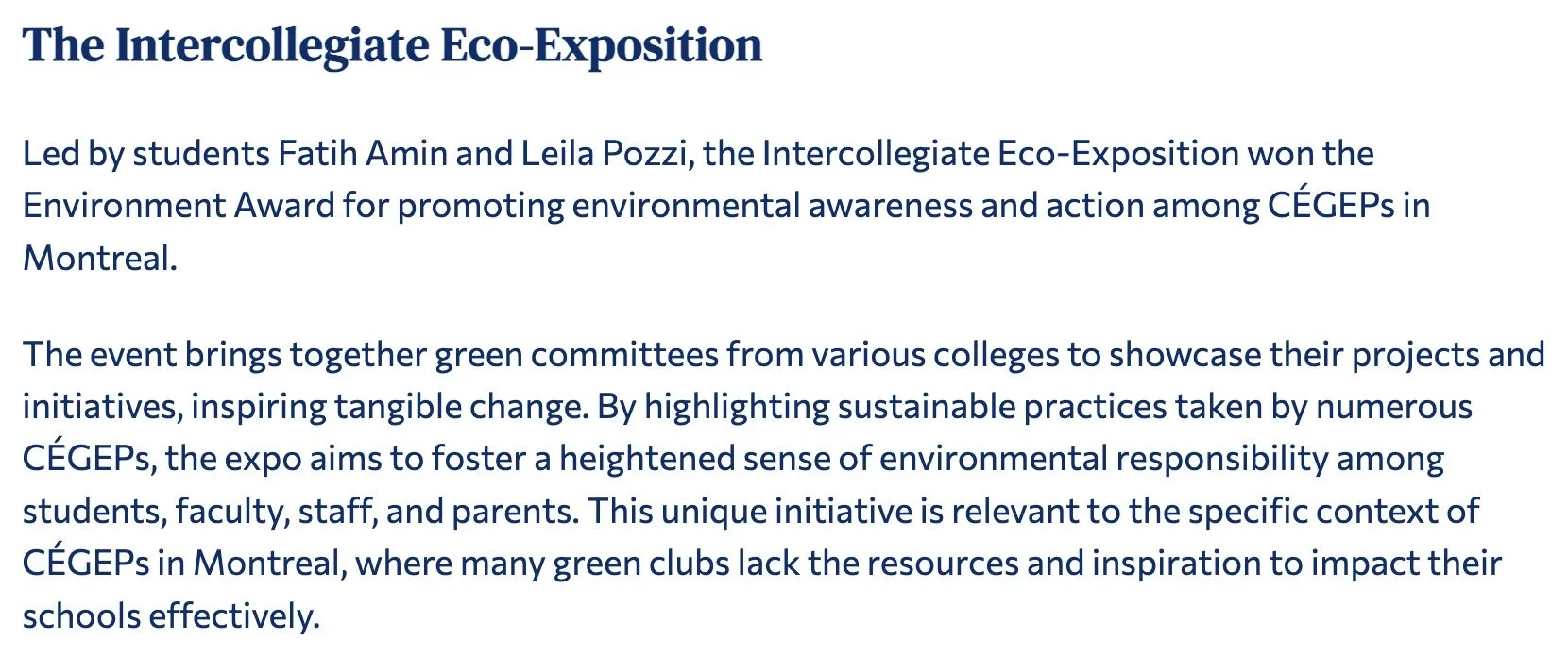
photo and content from Dawson College News
Today, studying law has allowed me to deepen this involvement. This commitment has taken shape through my involvement in both the environmental law committee and the Indigenous law committee. These experiences have helped me better understand how environmental protection, Indigenous legal traditions, and the right to a healthy environment are deeply interconnected. They have also reinforced the importance of ensuring that legal frameworks reflect lived realities. Beginning next fall, I will continue this work through an internship at the Centre québécois du droit de l’environnement (CQDE).
“My journey has shown me that climate work is not only about reducing emissions, it is about understanding power, inequality, and responsibility, and working toward solutions that are both effective and fair.”
~Leila Pozzi
As part of the submissions application we asked participants to answer these 3 questions in addition to their essay or video.
What future goals do you have around your environmental and climate work, and do you have any future projects in mind?
I plan to pursue a legal career focused on environmental and climate justice, with a particular emphasis on the right to a healthy environment and the intersection between environmental law and Indigenous legal orders. My goal is to contribute to more equitable and effective environmental governance by supporting community-led advocacy and strengthening legal protections at both the provincial and federal levels.
In the near future, I hope to deepen my practical experience through internships with organizations such as environmental law clinics, while also pursuing specialized training in sustainable business law and environmental law, including upcoming summer programs in Europe and Costa Rica. I am particularly interested in developing tools that help bridge legal knowledge and public engagement, making environmental law more accessible to youth.
I also aim to continue creating spaces for youth-led dialogue and collaboration, building on past initiatives that brought together students to share concrete sustainability projects across institutions. In parallel, I hope to contribute to research and storytelling projects that highlight the lived impacts of environmental decisions on communities, ensuring that policy discussions remain grounded in real experiences.
If you could share one message of hope for your community, what would it be? Briefly explain why you would choose this message.
My message of hope is that real change is already happening, and young people are not just part of it, we are driving it. Across communities, youth are organizing, creating, and pushing for solutions that are more inclusive, and sustainable. Even when progress feels slow, every action, whether it’s a local initiative, a conversation, or a policy change, builds momentum.
I choose this message because it shifts the narrative from climate anxiety to collective power. It reminds us that we are not alone, and that our voices matter. Seeing other young people take action has been one of the most powerful sources of hope in my own journey, and I believe that recognizing our shared impact can inspire even more people to get involved and believe in the possibility of meaningful change.
Who or what inspires you to work on climate change?
I’m inspired by the people and moments that have made the impacts of climate change feel immediate and tangible. Working on a field project examining the local effects of the Northvolt battery plant showed me how environmental decisions directly affect communities’ health, land, and sense of security. Hearing residents speak about their concerns made it clear that climate work must stay grounded in lived realities.
I’m also deeply inspired by Indigenous knowledge holders and community leaders who approach environmental protection through a relationship to land based on responsibility and reciprocity. That perspective has challenged me to think beyond purely legal or technical solutions.
Finally, I’m motivated by the young people I’ve worked with through initiatives like intercollegiate sustainability events. Seeing students come together to share concrete, replicable projects proved that change doesn’t always start at the top,it often begins within our own communities. These experiences continue to push me to pursue climate work that is both legally impactful and community-driven.