

Amy Clark
2026 National Youth Climate Activism Video Entry
Amy is a 17 year old from Manitoba.
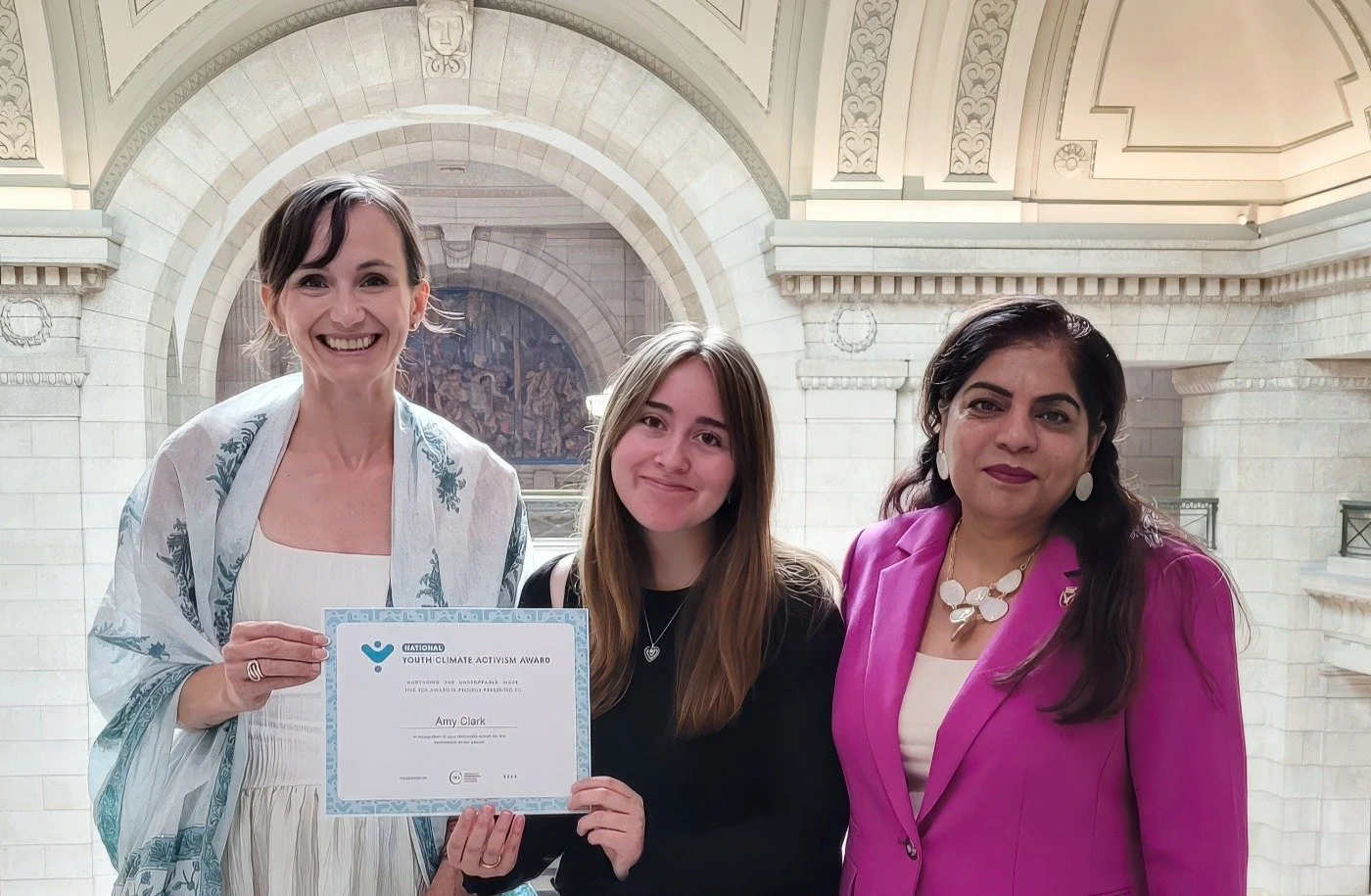
Minister Cable (Minister of Post-Secondary Education), Amy Clark and her delegate Dr. Anju Bajaj.
Amy Clark is a 16-year-old student from southern Manitoba whose passion for science is driving innovative climate and environmental research. A dedicated science fair competitor since Grade 7, Amy combines her interests in physics, engineering, and environmental science to tackle real-world challenges affecting both people and the planet.
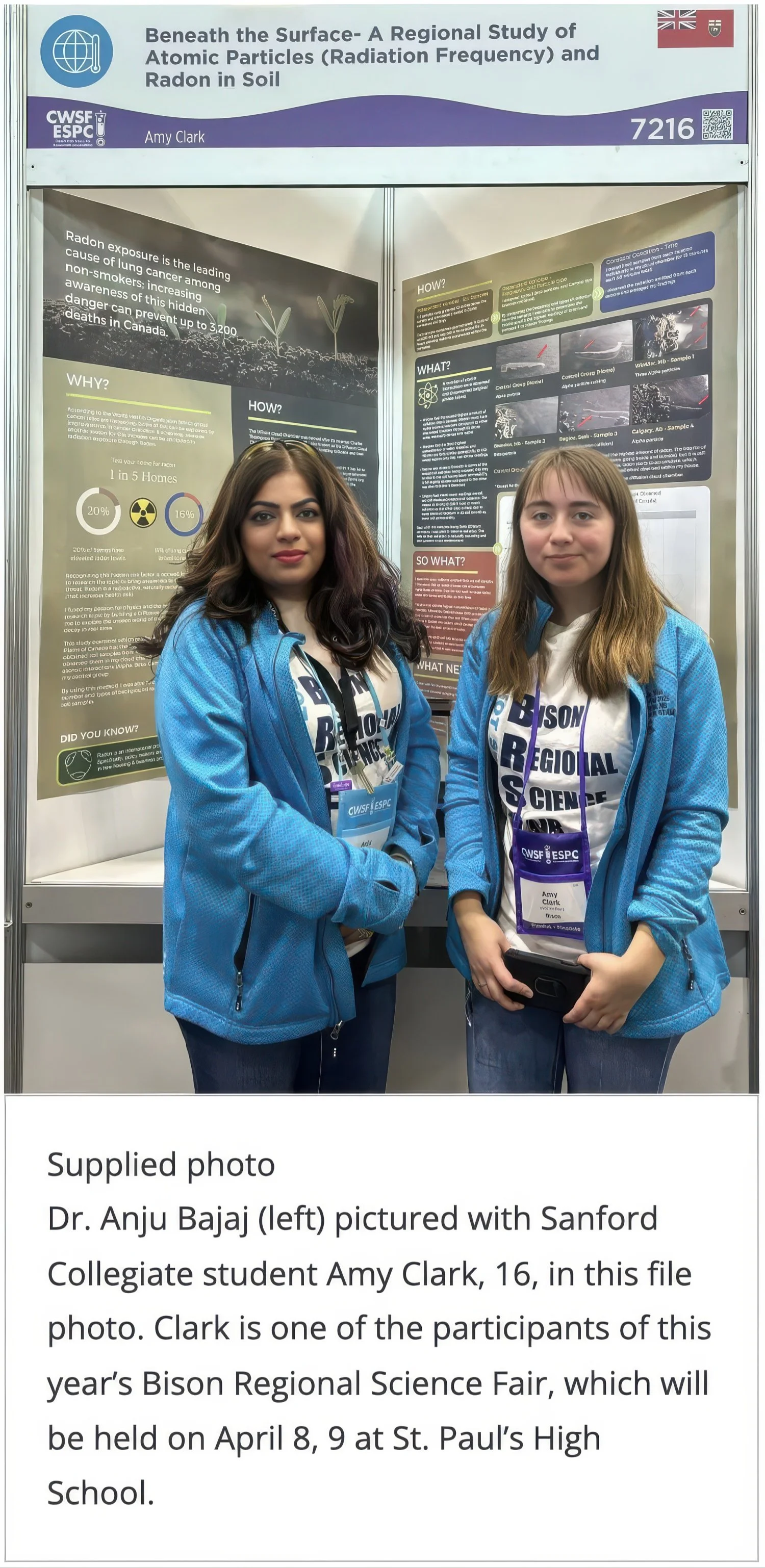
Last year, Amy focused her research on radon gas, a naturally occurring radioactive gas and the second leading cause of lung cancer. To study radon risks across the Canadian Interior Plains, she built her own homemade cloud chamber, a device that allows ionizing radiation to become visible to the human eye. Using soil samples collected from different regions, Amy investigated where radon exposure risks may be highest and how climate may influence radon prevalence over time.
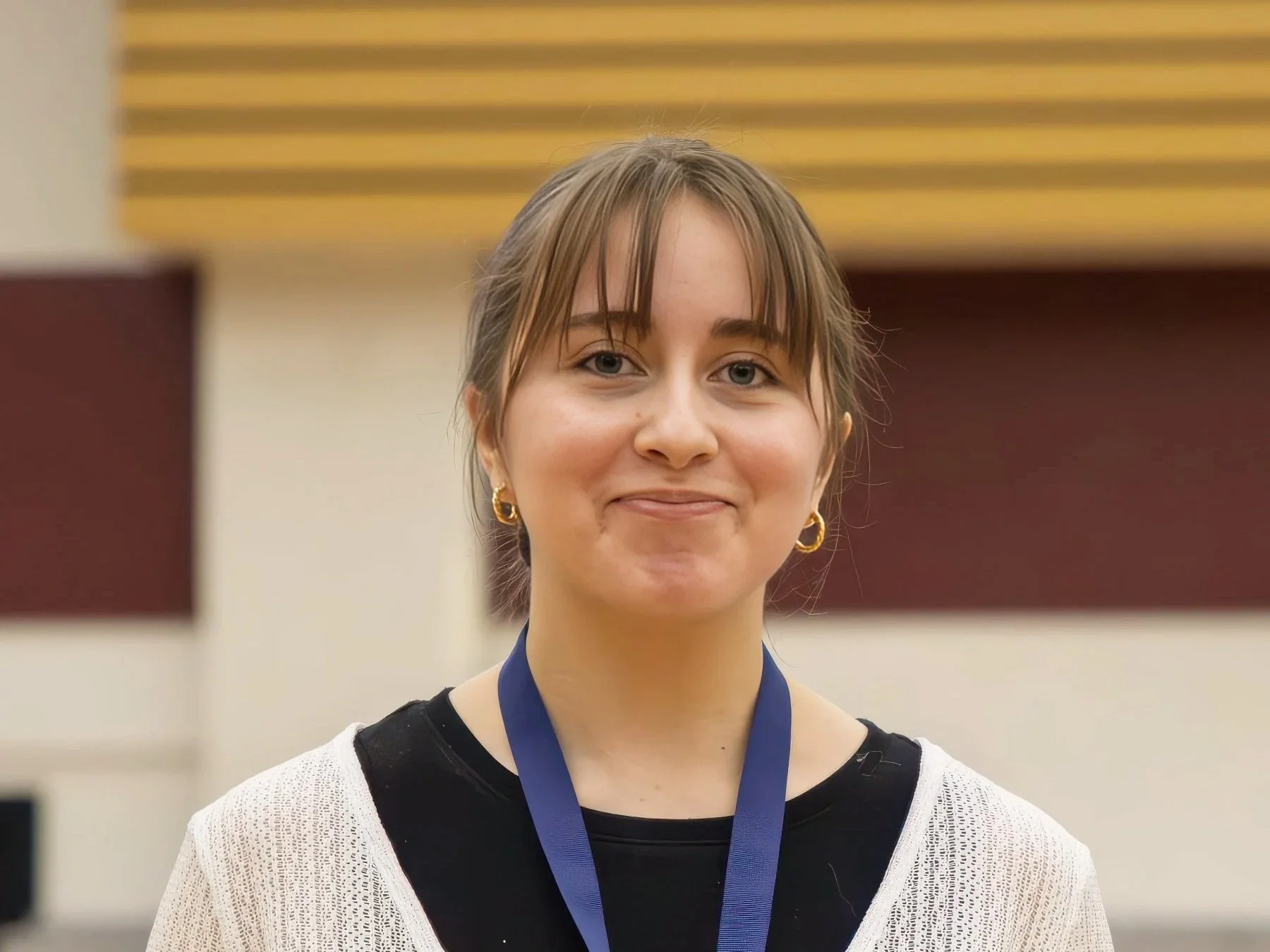
Her project earned a gold medal at the Bison Regional Science Fair, where she also received the Best Environmental and Climate Change Project Award, a SHAD scholarship, and an award from the University of Manitoba. Amy was later selected to represent Team Bison Manitoba at the Canada-Wide Science Fair in Fredericton, where she received the Canadian Nuclear Society Nuclear Science and Technology Award.
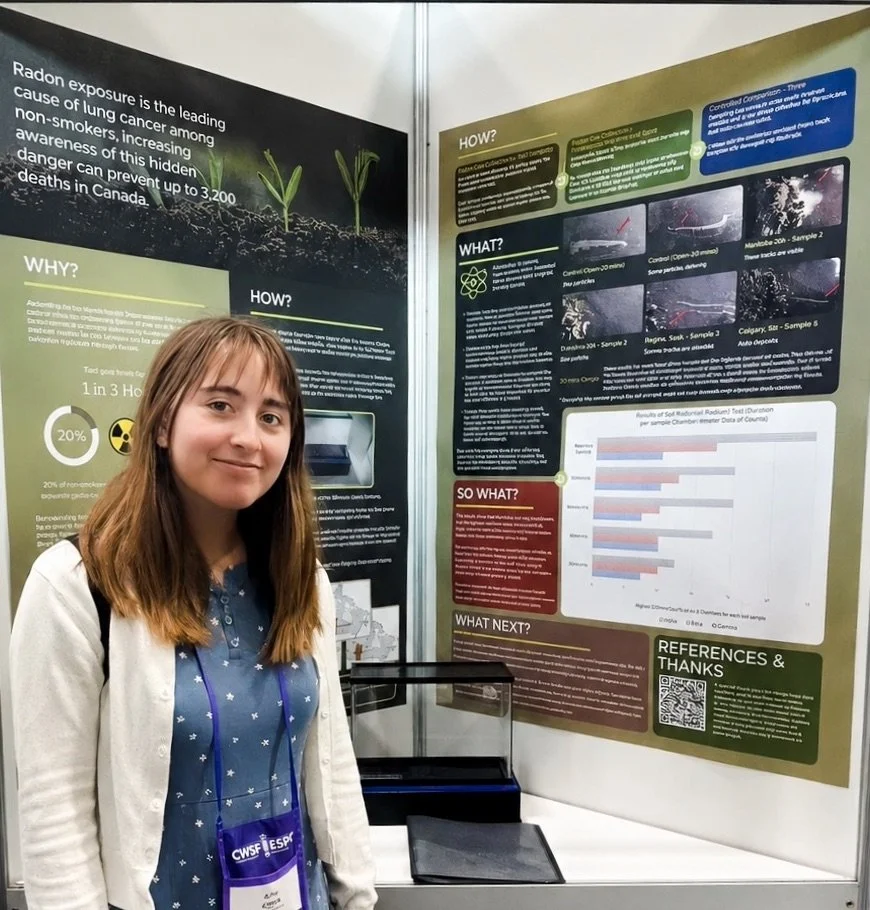
Amy at her booth at CWSF 2025
Research Project: Beneath the Surface
Using a homemade cloud chamber, Amy collected soil samples from Manitoba, Saskatchewan, and Alberta to investigate radon activity across the Canadian Interior Plains. Her research found that Manitoba samples showed the highest levels of radioactive activity among those tested. As radon is the second leading cause of lung cancer worldwide, Amy hopes her work will help inform both the public and policy makers about this often-overlooked environmental health risk.
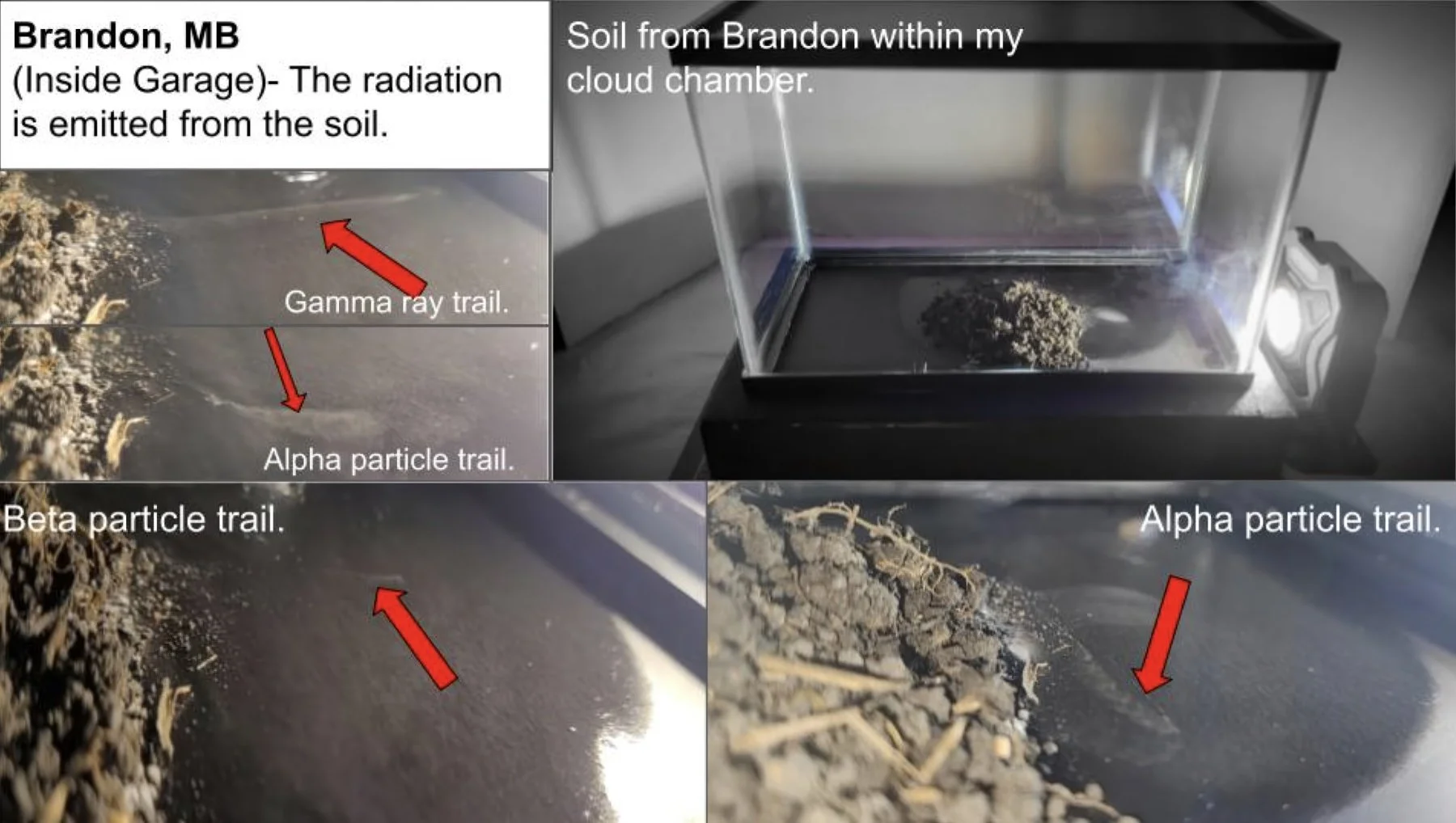
View Amy’s project board with all images, video and slides here on the Youth Science Canada site
Amy’s work has also extended beyond the science fair stage. She had the opportunity to speak with environmental scientists and Manitoba government ministers about the importance of environmental research and policy, helping raise awareness about radon exposure and climate-related risks.
View this project board with all images, video and slides here on the Youth Science Canada site
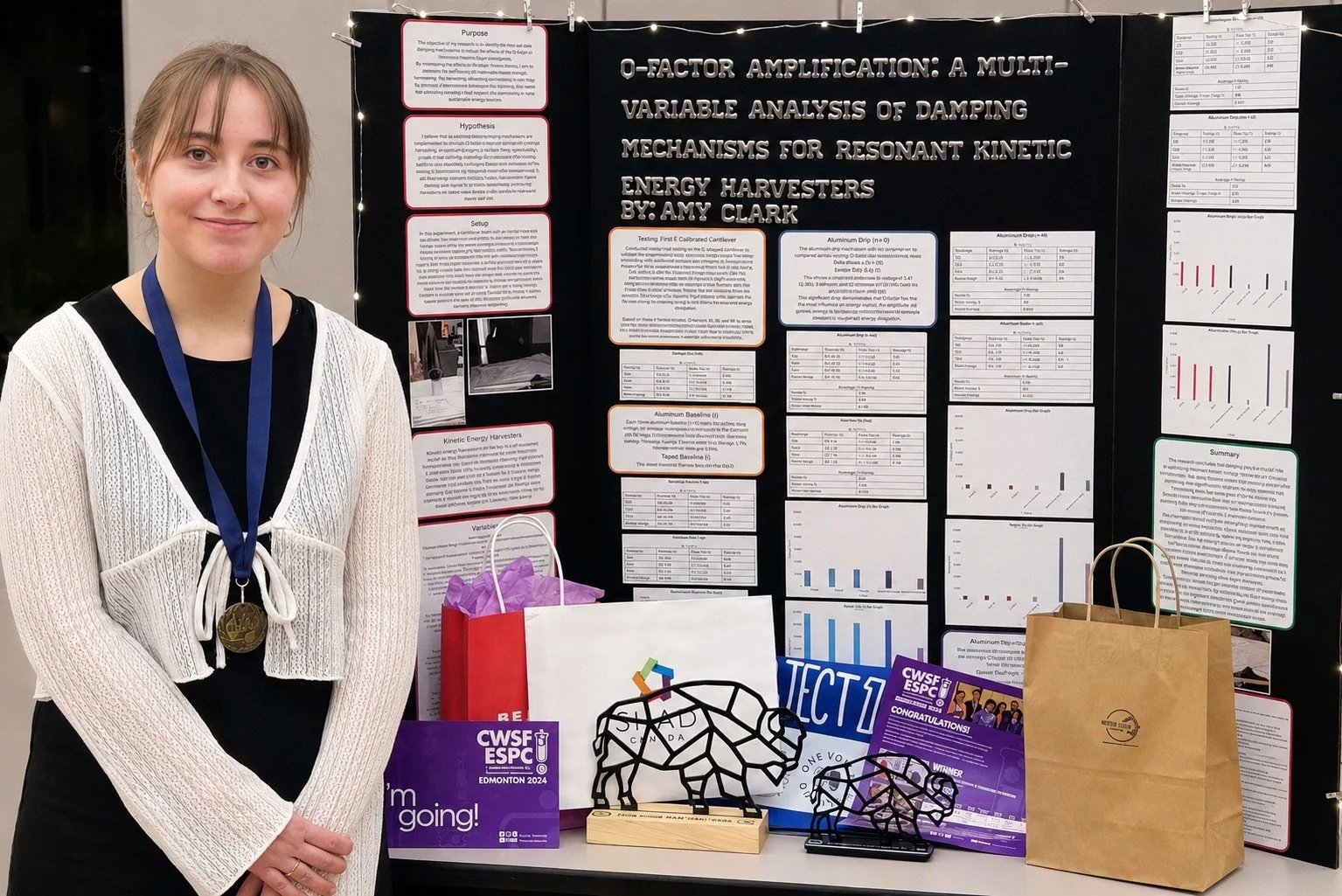
This year, Amy turned her attention toward sustainable energy solutions through research on kinetic energy harvesters — devices that convert vibrations from everyday motion into electricity. Her project explores ways to improve the efficiency of these systems by studying resonators and energy containment amplification, with the goal of reducing reliance on disposable batteries and lowering carbon emissions.
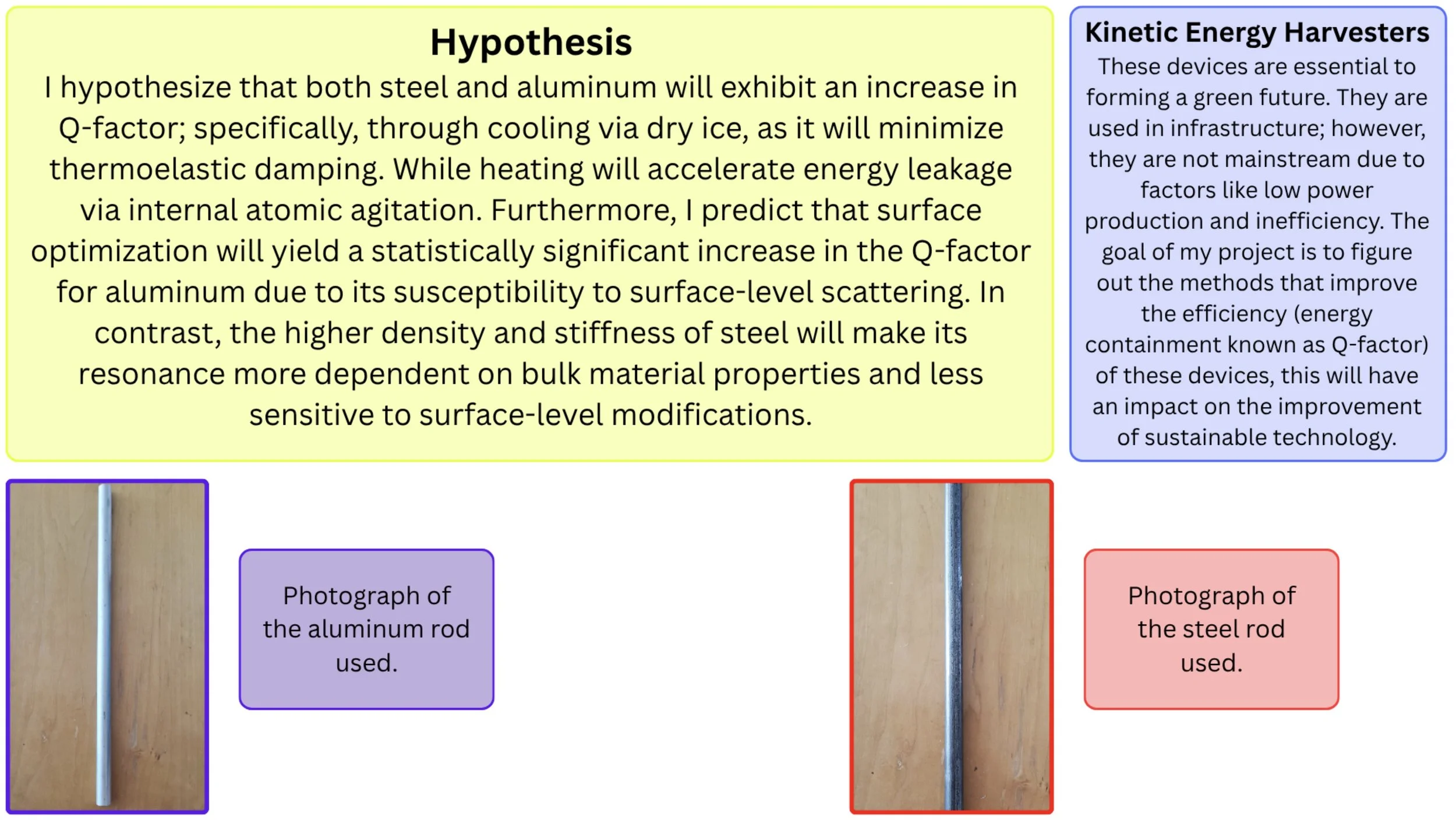
Listen as Amy explains (in plain language) what ‘kinetic energy harvesters’ are.
Her latest research once again earned a gold medal at the Bison Regional Science Fair, along with the Best Intermediate Project Award and another SHAD scholarship. Amy was selected for a second time to represent Team Bison Manitoba at the Canada-Wide Science Fair, this year in Edmonton.
Amy with MLA Carla Compton receives 2026 Bison Award at CFSW.
Team Bison 2026 - photo courtesy CWSF info. From left to right Deborah Hundeyin, Ayshani Mukerji, Ramneek Rai, Amy Clark, Joseph Mutter, and Dr. Anju Bajaj.
SHAD Community Changemakers Award 2026
Amy in the Press
Click to read article at Winnipeg Free Press
“My goal is to prove that innovation is our best defence against climate change.”
~Amy Clark
Whether she is researching radiation, renewable energy systems, or speaking with scientists and policy makers, Amy hopes to demonstrate the important role young people can play in creating climate solutions.
As part of the submissions application we asked participants to answer these 3 questions in addition to their essay or video.
What future goals do you have around your environmental and climate work, and do you have any future projects in mind?
My future goals focus on bridging the gap between high-level physics and climate solutions. Having done science fairs for four years and Canada-Wide Science Fair for my radon research, I wish to continue working with scientists to investigate how climate change is shifting radon gas levels in Canada. My research supports and will continue to aid in the future of sustainable innovation.
Currently, I am tackling the global battery crisis by optimizing kinetic energy harvesters. My research into energy containment (Q-factor) has led me to develop a device that generates electricity from vibrations, improving the path toward self-sustaining, battery- free infrastructure. I was chosen this year to represent Manitoba at the 2026 Canada-Wide Science Fair and that's just the beginning of my goals; I want to work toward being at the forefront of the transition to primarily green technology. My hope is to work with the national scientific community to replace toxic, finite energy sources that drive climate change with self-sustaining solutions. Whether I am researching climate induced radiation risks or working on ways to harvest clean energy, my mission is to help lead toward a more sustainable future.
If you could share one message of hope for your community, what would it be? Briefly explain why you would choose this message.
"We are never truly stuck with the environmental challenges we face today; we are simply waiting for the next scientific breakthrough." This is my message because in my research on radon and kinetic energy harvesting, I've seen how solutions like turning wasted vibrations into power can help solve a massive, toxic problem like the battery crisis, and for every problem, there is a solution that we can work on or uncover.
When thinking about climate change, it is easy to feel defeated. To feel as though the world is a lost cause. It is not. Hope isn't just faith in something working out; it is meaningful effort for change, whether in a lab, classroom, or even at home we can do something to ensure our Earth's future is self-sustaining. By combining our ingenuity with action, we can prove that a brighter, cleaner world is possible.
Who or what inspires you to work on climate change?
I live in a small community in rural southern Manitoba, where the effects of climate change are hard to ignore. Every summer, I've seen the fields dry up due to droughts, and every winter, the snow arrives later and later. It's scary to see these changes happening around me, but it's also motivated me to take action. I want to give back to the land that has given so much to us, and that's truly what drives my passion for climate work. It all started with science fairs, but it's the personal experiences that really drive me to make a difference.
I used to worry a lot but then I realized that wasn't going to solve anything. So, I started using science fairs as a way to turn my worries into something useful. For example, my last year's science fair project was on researching radon levels in soil. Compared to this year where I've been working on a project to reduce the number of toxic batteries we use in infrastructure.
I'm lucky to have such a supportive and inspiring community, family, and friends who inspire me to keep working on solutions to big problems that we face.