

Montreal teen develops tool for teaching kids about climate change
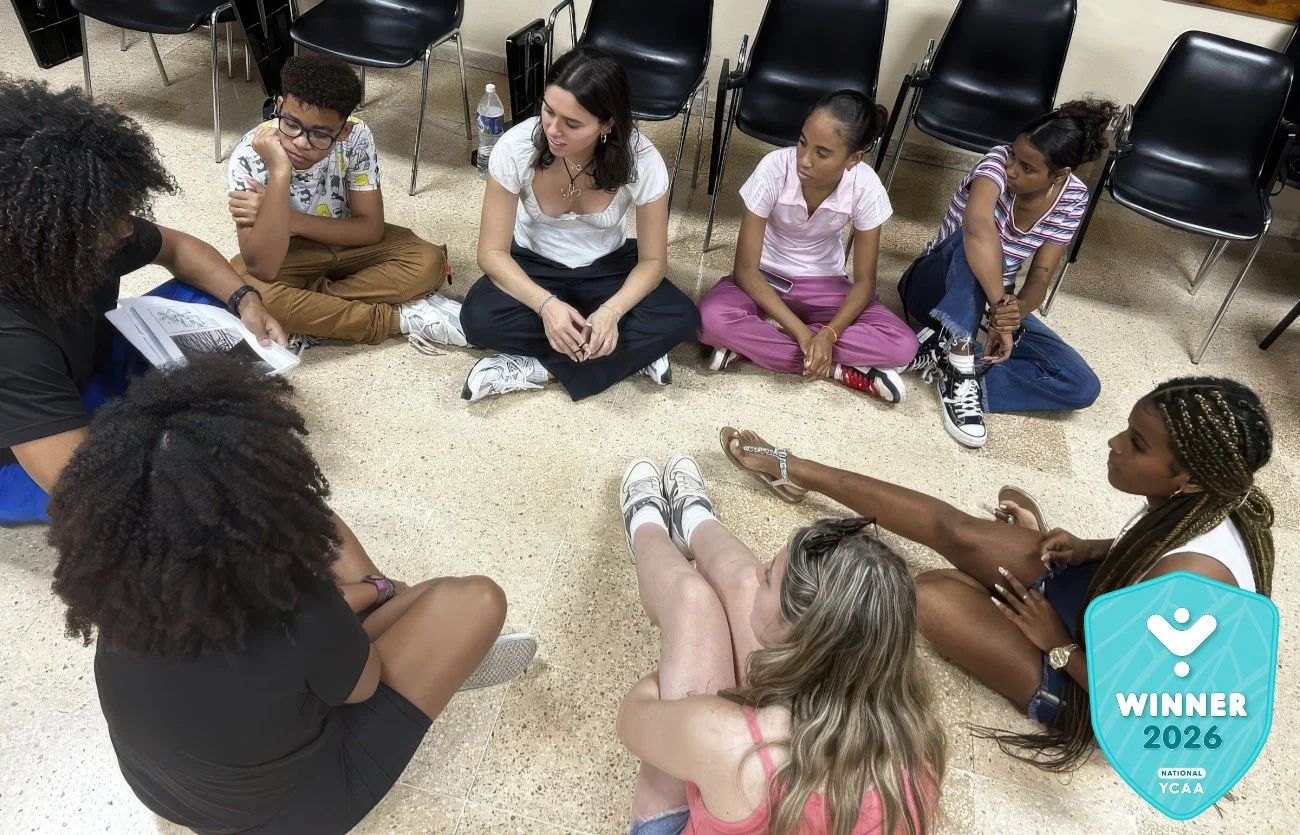
Leila Pozzi holds a discussion with youth at the Dr. Martin Luther King, Jr. Memorial Center (CMMLK) in Havana, Cuba. Photo by: Gisela Frias
By Patricia Lane & Leila Pozzi
Leila Pozzi is making it easier for children and youth everywhere to talk about climate change. This 19-year-old Starfish Canada Climate75 Fellow from Montreal has developed and tested a framework to allow teachers and student leaders, regardless of geography or social context, to engage young audiences.
Tell us about your project.
I am very worried about how little pressure decision-makers feel to act on climate and protect nature, and I know we need to talk about it more. But we are all so different.
As part of my CÉJEP coursework with Dawson College's social change and solidarity program, I travelled to Cuba to learn how young people there talk about climate with each other and their decision-makers. Cuba is interesting because we were encouraged to see it as a leader for low-carbon living. But I learned they are not driven by a moral imperative, but rather by their lived experience. Their society has been deeply shaped by the United States embargo in place since the 1960s. Necessity has motivated their shift away from fossil fuel dependence toward a more self-sufficient way of life.
I also discovered that conversations young people have in Havana, a large urban centre, are very different from those in Puerta Esperanza, a smaller rural one. If I asked, "What is your environment?," people in Havana might mention parks and oceans, while people in Puerto Esperanza might mention their uncle's tobacco farm. If I asked what they do to protect it, answers ranged from cleaning up beaches to not knowing it needed protection at all. People in Havana have more time and can more easily come to meetings. People in the countryside are further apart and busy working the land. Elementary school children have fewer social constraints than teenagers. Yet, climate change affects us all. How can we talk across these differences?
I returned to Montreal asking whether we could build a framework for conversations about climate and the environment that worked regardless of where people lived or what kind of life they had and without imposing our biases on each other.
I brainstormed the concept at the Intercollegiate Eco-Exposition with students from CÉJEPs across the region, and together, we developed a scaffolding: a series of questions that lead to other questions along guided pathways. It avoids making statements and leaves plenty of room for collaboration in both the design of the learning and its outcomes.
Free to read on National Observer - no sign-in required
Leila Pozzi is a 2026 National Youth Climate Activism Award recipient. View her winning submission here.